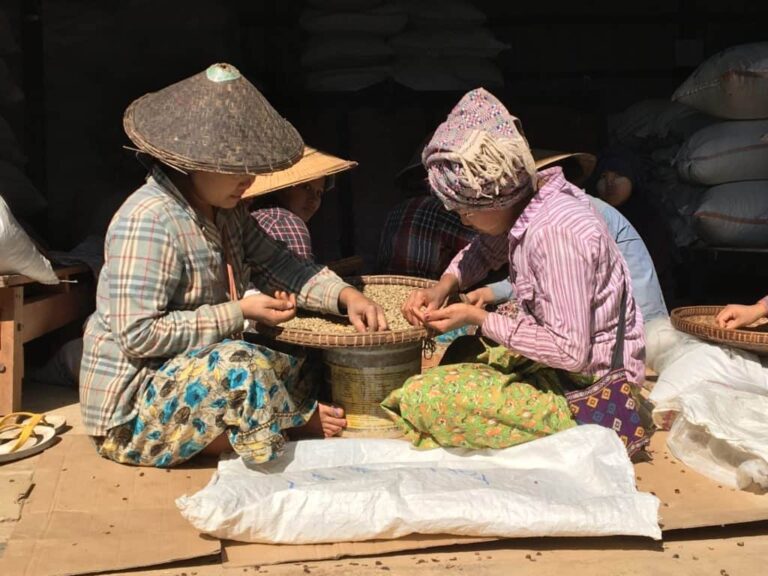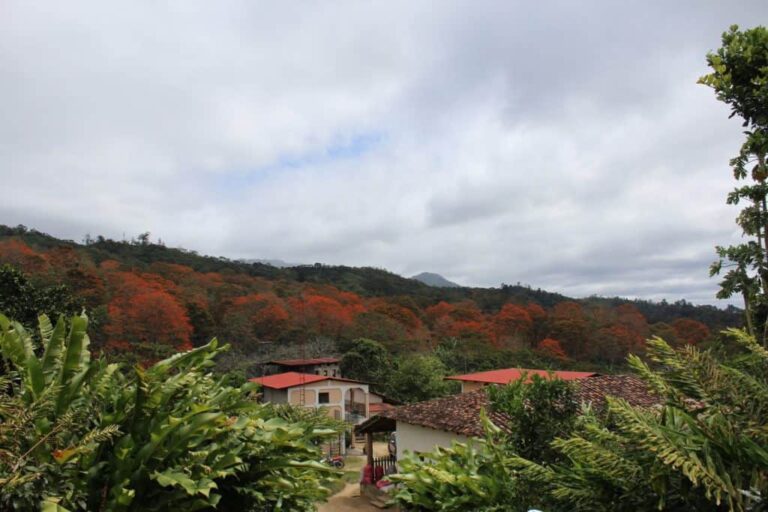
Central America packs a huge variety of coffee into a narrow strip of land. Volcanoes, high mountains and cloud forests give Guatemala, Honduras, Mexico, Nicaragua, El Salvador and Costa Rica some of the best growing conditions in the world, and most of their coffee comes from small family farms. Here's what to expect from each country, and the Central American coffees that have been in our boxes.
What Central American coffee tastes like
Most Central American coffee is washed, which gives a clean, bright cup. Expect sweetness, a medium body and notes of chocolate, caramel, nuts and fruit, with the brightest, fruitiest coffees coming from the highest farms. Many farms still grow classic varieties such as Bourbon, Caturra and Catuaí, often in the shade of taller trees.
Guatemala
Guatemala's coffee grows on volcanic slopes and in high mountain valleys, in regions such as Antigua, Atitlán, Acatenango and Huehuetenango. Huehuetenango, in the far north-west, has some of the country's highest farms and is known for bright, fruity, complex coffees. Guatemalan coffees tend to be full and sweet, with chocolate, nuts and fruit.
Finca La Providencia (Huehuetenango)
In the mountains around San Pedro Necta, and farmed by the Palacios family since 1954. Today it's run by Max Ariel Palacios Villatoro, who has more than 40 years' experience. The land is steep, so nearly a third of the farm is kept as native forest to stop the soil washing away. Caturra, Bourbon, Mundo Novo and Catuaí, pulped with water-saving eco-pulpers and dried on patios. Hazelnut, apple, raisin and chocolate. Roasted for us by Moonroast Coffee.

Finca La Bolsa (Huehuetenango)
Bought in 1958 by Jorge Vides, a doctor who turned the land into a coffee farm and after whom the local hospital is named. The farm sits between two mountains on limestone-rich soil. It funds a school and nursery for workers' children, with weekly food parcels for families whose children attend. Bourbon and Caturra, washed and sun-dried. Strawberry, milk chocolate and black cherry with a juicy acidity.

Finca San Francisco (Quiché)
One of the largest coffee farms in Guatemala, with almost 1,000 hectares in San Francisco Cotzal in the northern department of Quiché. The owners have built new housing, schools and communal kitchens for their workers, and the farm also grows macadamias, lemons and avocados, surrounded by natural forest. Toasted almond, cocoa, orange and honey.
Honduras
Honduras is Central America's biggest coffee producer, and almost all of it comes from smallholders. The best coffees come from the western and southern highlands, such as Copán near the Guatemalan border and Marcala in La Paz. Honduran coffee is often sweet and fruity, with caramel and chocolate.
Mezcla de Mujeres (Copán)
A blend of coffees from women producers in Copán, made to highlight the role of women in coffee. The cherries were pulped at the Aruco wet mill and fermented for a little longer than usual, which brings out sweetness and red fruit. Cherry, blackcurrant and green apple with a lingering cinnamon finish. Roasted for us by Coffee Central.

Aldea Capucas (Honduras)
From the COCAFELOL co-operative, which has supported its members with technical and financial help since 2000. Cherries are picked by hand and taken to central washing stations, and the waste is turned into organic fertiliser for members' farms. Catuaí, Caturra and Pacamara. Clean and smooth with a caramel finish; as espresso, golden syrup and lemon with a buttery body.

La Florencia (La Paz)
A 21-hectare farm near Florida de Opatoro, in La Paz. Doña Isaura inherited it from her father with no experience of farming coffee, and has built it into a producer of high-quality speciality coffee, improving year after year. This micro-lot is Red Bourbon from the shaded top of the farm at 1,500–1,600 metres, washed and dried on patios for 8 to 12 days. Nectarine, pomelo and toffee with a floral aroma. Roasted for us by Bailies Coffee Roasters.

Unit Fourteen: Finca El Puente (Marcala, La Paz)
Owned by Fabio Caballero and run by his daughter Marysabel and her husband Moisés. The family makes its own organic fertiliser from coffee pulp and manure, and grows oranges, avocados and bananas for the pickers and for shade. Pickers carry two bags, one for ripe cherries and one for everything else, and the farm has a strong record in the Cup of Excellence. Catuaí, washed, soaked and dried on raised beds for up to 20 days. Red berries, black grape, plum and molasses with a juicy finish. Roasted for us by Round Hill Roastery.

Mexico
Most of Mexico's coffee is grown by smallholders in the southern states of Chiapas, Oaxaca and Veracruz, much of it under shade and a lot of it organic. Mexican coffees are usually mild and sweet, with nuts and chocolate. Chiapas, on the border with Guatemala, produces some of the best.
Finca Guadalupe Zaju (Chiapas)
A 310-hectare estate made up of three farms, in the Soconusco region of Chiapas near the Guatemalan border. This micro-lot comes from the oldest and highest section, Finca Chanjul, at around 1,400 metres. All the coffee is shade-grown, the farm treats all its processing water, and the old Chanjul mill is now a school. Caturra, Marsellesa and other varieties, pulped with a water-saving eco-pulper and fermented for 15 to 40 hours. Praline, milk chocolate and raisin. Roasted for us by Garage Coffee.

Nicaragua
Nicaragua's coffee comes mainly from the northern mountains of Jinotega, Matagalpa and Nueva Segovia, near the border with Honduras. Much of it is grown under shade, and the best lots are sweet and balanced, with chocolate, caramel and soft fruit.
El Neto #2: Finca El Bosque (Nueva Segovia)
From Finca El Bosque ("the forest"), owned by Julio Peralta since 1991, in the mountains of San Fernando near the Honduran border. Coffee grows densely among banana and inga shade trees at 1,250–1,560 metres. Caturra, hand-picked between December and March, washed and dried on patios at the nearby San Ignacio mill for 10 to 12 days. Orange, strawberry and apricot. Roasted for us by Campbell & Syme.

Finca La Bastilla (Jinotega)
An estate of 311 hectares about 20 kilometres from Jinotega, set in a mountainous nature reserve on volcanic soil. Around half the land is coffee; the rest is mostly primary forest and a farm school, La Bastilla Agricultural Technical School. Rainforest Alliance certified since 2003. Caturra and red and yellow Catuaí at 1,050–1,450 metres. Roasted a little darker for a full body and low acidity, with chocolate, stone fruit and caramel.

Finca Santa María (Nueva Segovia)
A 50-hectare farm in Dipilto, Nueva Segovia, at around 1,400 metres, part of the Las Nubes group of farms. It grows mainly Caturra, processed at the farm's own wet mill and then dried on raised beds stacked three or four high at the group's dry mill in Matagalpa. Stone fruit and baker's chocolate with a creamy body and orange acidity. Roasted for us by Stewarts of Trent Bridge.

El Salvador
El Salvador's coffee grows on the slopes of its volcanoes, in regions such as Apaneca-Ilamatepec in the west. It's known for Bourbon, and two famous varieties were developed here: Pacas and the large-beaned Pacamara. Salvadoran coffees are often sweet and balanced, with caramel, chocolate and fruit.
Finca Bosque Lya (Santa Ana)
On the foothills of the Santa Ana volcano, founded in 1932 by Gustavo Vides Valdés and named after his newborn daughter: Bosque Lya means "Lya's forest". Cherries are picked between January and March and processed at the El Borbollón mill, where the pulp is composted and returned to farmers as fertiliser, water is recycled, and a team of women hand-sorts the finished beans. Mainly Bourbon at 1,473–1,650 metres. Hazelnut, plum and cocoa with berries and tea rose. Roasted for us by Rounton Coffee Roasters.

El Roble: Los Nogales estate (Apaneca-Ilamatepec)
From the El Roble plot of Los Nogales, a 30-hectare estate at 1,450–1,650 metres run by the Salaverría family, who let buyers choose their coffee by plot, variety and process. This natural micro-lot came from Bourbon-Pacas hybrid trees and was dried on raised beds. Blueberry, parma violet and dried fruit. Roasted for us by Horsham Coffee Roaster.

Costa Rica
Costa Rica is known for high-quality Arabica, mostly grown on small farms in regions such as Tarrazú, the Central Valley and the West Valley. Many farmers now process their own coffee at small "micro-mills", and Costa Rica is famous for honey processing, where some of the sticky fruit is left on the bean as it dries. Costa Rican coffees are clean, bright and sweet.
La Luna (Tarrazú)
From Puente Tarrazú, a micro-mill run by six local families led by Rodolfo Rivera, high in the Tarrazú region. The mill is known for its honey coffees, but this lot was dried as a natural on raised beds for 12 to 15 days to bring out more fruit. Caturra from the La Peña farm at 1,650 metres. Red grape and caramel nut bar with a sweet dried-fig aroma. Roasted for us by Bailies Coffee Roasters.

Los Robles (Naranjo)
Part of the Estrella Naranjo programme run by the Coopro Naranjo co-operative, which buys coffee from six mountain ranges around Naranjo and processes each one separately, so every lot can be traced to its range. Members are chosen for the quality of their coffee, agronomists check the sugar levels in the cherries to decide when to pick, and the farmers are paid a premium. Caturra and Catuaí from farms at 1,300–1,700 metres. Blackberry, pomegranate and cranberry. Roasted for us by Olfactory Coffee Roasters.

How to brew Central American coffee
These are versatile coffees. The brighter, fruitier lots from Guatemala, Costa Rica and El Salvador shine as filter, in a pour-over or AeroPress. The sweeter, chocolatey coffees from Honduras, Mexico and Nicaragua are great in a cafetière, as espresso, or with milk. Start with 15g of coffee to 250ml of water just off the boil.
For more origins, see our guides to South American, Ethiopian, Kenyan, African and Asian and Pacific coffee, or meet our roasters.
Discover a new coffee every delivery
Get a different single-origin speciality coffee from the UK's top independent roasters, freshly roasted and 100% arabica. Choose whole beans or a grind for your brewer, including decaf. From £12.99 with free UK delivery, and you can skip a delivery, change your date or cancel anytime.