Ethiopia and Kenya get most of the attention, but some of Africa's most exciting coffee comes from its smaller producers. Rwanda, Uganda, Tanzania and Malawi grow bright, fruity, sweet coffees high in the hills of East and Southern Africa, much of it from smallholder farmers. Here's what to expect from each, and the African coffees that have been in our boxes.
For the two best-known origins, see our guides to Ethiopian coffee and Kenyan coffee.
Rwanda: the land of a thousand hills
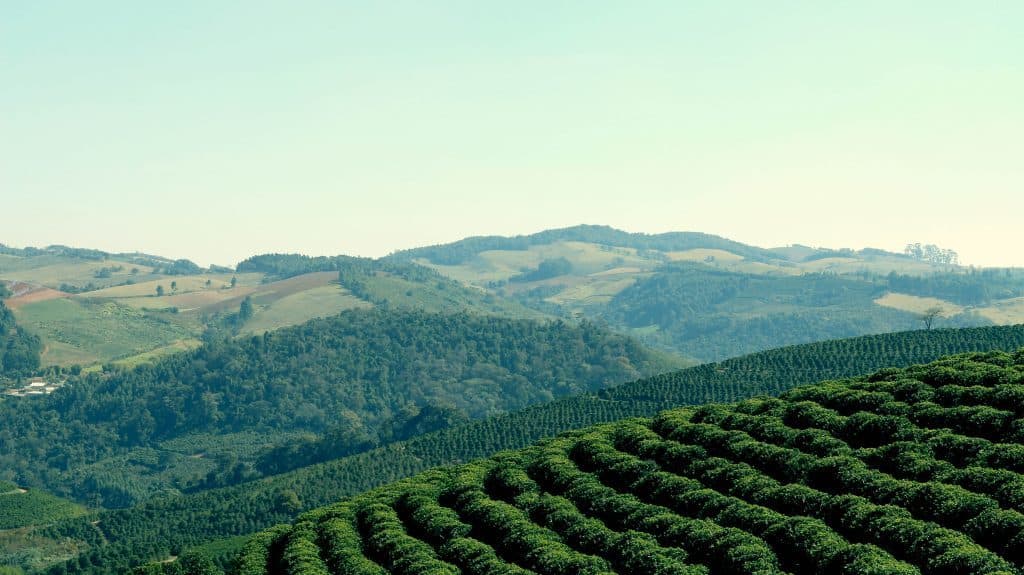
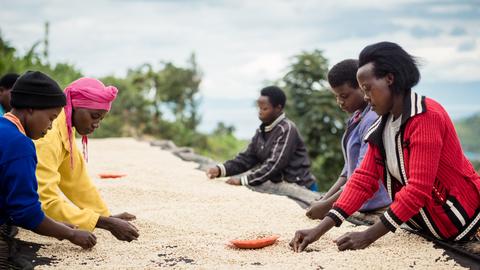
Rwanda's coffee grows on steep green hills, mostly between about 1,500 and 2,100 metres. Around 400,000 farming families grow it, each with a few hundred trees. They pick the ripe cherries by hand and take them the same day to a local washing station, where they're sorted and processed.
Most Rwandan coffee is Red Bourbon, an old Arabica variety known for sweetness. Washed Rwandan coffees tend to be clean and juicy, with red fruit, orange and black tea notes. Naturals, dried in the whole cherry, are fruitier still.

Uganda
Uganda is one of Africa's biggest coffee producers, although most of its crop is Robusta. Its Arabica grows high on the slopes of Mount Elgon in the east and the Rwenzori Mountains in the west. The best lots are washed and have a sweet, full body with fruit and chocolate notes.
Tanzania
Tanzania's Arabica grows mainly around Mount Kilimanjaro and Arusha in the north, and in the southern highlands around Mbeya. Tanzanian coffee is often bright and winey, with blackcurrant and citrus, and the country is well known for its peaberry coffee, where a single round bean grows in the cherry instead of two.
Malawi
Malawi is a small producer, with most of its coffee grown by smallholders in the northern highlands around Mzuzu and the Nyika Plateau. The best Malawi coffees are sweet and well balanced, with soft fruit and a gentle acidity.
African coffees that have been in our boxes
Bwishaza (Rwanda, natural)
From the Bwishaza co-operative of around 500 farmers. Red Bourbon, hand-picked and dried in the cherry, two or three cherries deep. Juicy strawberry and orange with a rich, creamy body. Roasted for us by Horsham Coffee Roaster, whose team has visited the co-operative every year since 2014.

Nyungwe (Rwanda, washed)
From the Nyungwe washing station, at 1,660–2,100 metres, which buys cherry from around 546 smallholders through 12 collection points within 10km. Red Bourbon, washed and dried slowly on raised beds. Cranberry, orange and cocoa. Roasted for us by Rounton Coffee Roasters.

Ihani (Uganda, washed)
From the Ihani washing station at about 1,470 metres. SL28, SL14 and a local variety, washed with two fermentation rounds and dried on raised beds for around 18 days. White peach, orange zest and chocolate with a sweet, floral finish. Roasted for us by Press Coffee & Co.

Mzuzu Women's AA (Malawi, washed)
From women farmers in the Mzuzu Coffee Planters Co-operative Union, who own their own coffee fields and are paid directly, with an extra premium for a Women in Coffee programme. Grown in the hills of northern Malawi, mostly Catimore with some Geisha, fully washed and sun-dried. Orange, berry jam and tropical fruit with a smooth body and a wine-like acidity.

Mimba Estate AA (Tanzania, washed)
From the Mimba Estate in Mbozi, in the southern highlands near Mbeya. Bourbon and Kent varieties, hand-picked over three or four passes, pulped, fermented for about 12 hours and dried on tables for at least a week. Sweet blackcurrant and berries: almost like Ribena. Roasted for us by Garage Coffee.

How to brew African coffees
These fruity, bright coffees are at their best as filter: a pour-over, AeroPress or cafetière keeps the fruit clear. Start with 15g of coffee to 250ml of water just off the boil. Rwandan and Tanzanian coffees also make a lively espresso, and the sweeter Malawi and Ugandan coffees work well with milk.
See also our Ethiopian, Kenyan and South American guides, or meet our roasters.
Discover a new coffee every delivery
Get a different single-origin speciality coffee from the UK's top independent roasters, freshly roasted and 100% arabica. Choose whole beans or a grind for your brewer, including decaf. From £12.99 with free UK delivery, and you can skip a delivery, change your date or cancel anytime.