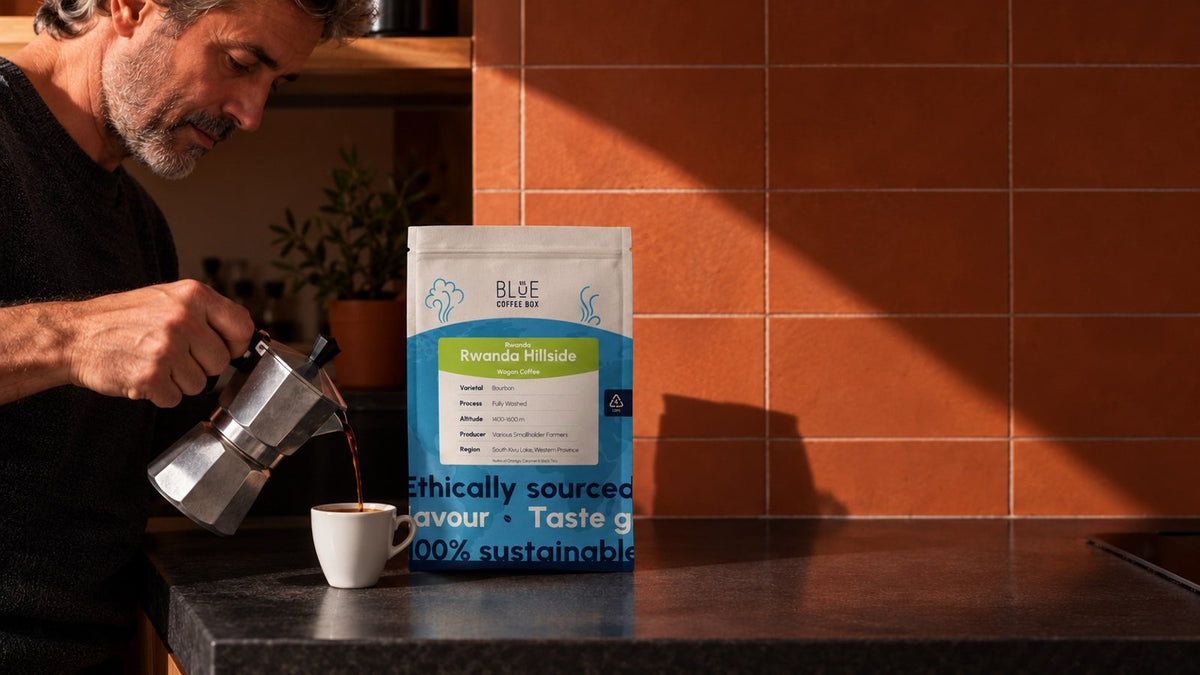
A stovetop coffee maker, often called a moka pot, makes a rich, strong coffee on the hob, without an espresso machine. It's simple once you know how, and a few small tricks make the difference between a smooth cup and a bitter one.
What is a moka pot?
The moka pot was made famous by the Italian company Bialetti, which started making its eight-sided aluminium pot in 1933. It has three parts: a bottom chamber for water, a funnel-shaped basket for the coffee, and a top chamber where the coffee collects.
As the water heats, steam pressure pushes it up through the coffee and into the top. The pressure is much lower than in an espresso machine, so moka pot coffee isn't quite espresso, but it's strong, full-bodied and great on its own or with milk.

What you need
- Coffee: a fine grind, a little coarser than espresso. If you buy ground coffee from us, choose the "Espresso or moka pot" grind.
- How much: fill the basket to the top, level but not pressed down. For a 3-cup pot that's roughly 15–17g of coffee.
- Water: freshly boiled from the kettle, filled to just below the safety valve.

How to make coffee in a stovetop
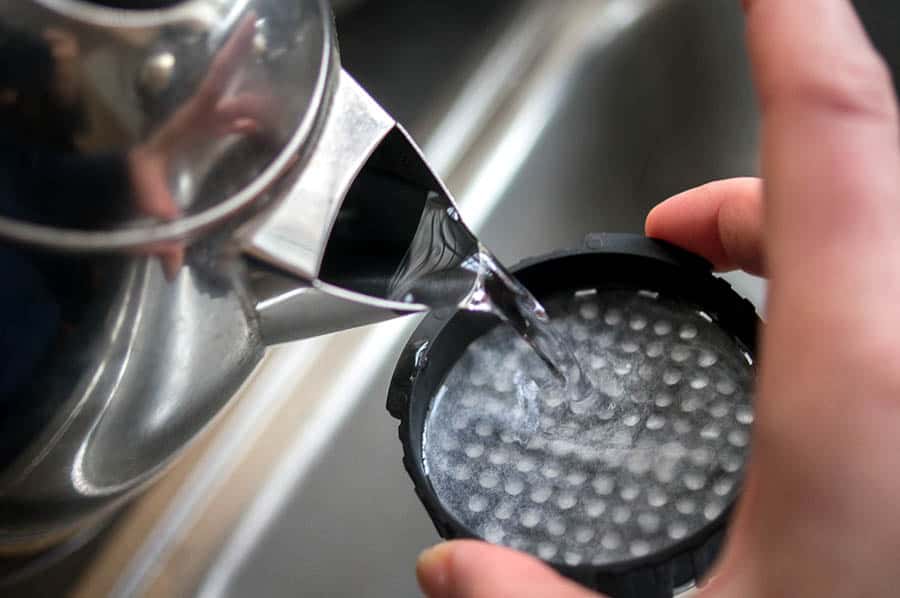
- Fill the base with hot water. Pour freshly boiled water into the bottom chamber, up to just below the safety valve. Starting hot means the coffee spends less time on the heat, so it's less likely to taste bitter or metallic.
- Fill the basket. Put the basket in the base and fill it with coffee. Level it off with your finger, but don't press it down: packing it tightly can stop the water flowing.
- Screw it together. Wipe any loose grounds off the rim, then screw the top on firmly. The base will be hot, so use a tea towel.
- Heat gently. Put the pot on a medium-low heat with the lid open, so you can watch it.
- Take it off in time. When the coffee starts to flow, it should come out dark and steady. As soon as it turns pale and starts to gurgle and sputter, take it off the heat.
- Stop the brew. Run the base under cold water for a few seconds to stop it brewing, then pour and enjoy.

Why does my moka pot coffee taste bitter?
- The heat is too high: turn it down, and start with boiled water.
- It was left on too long: take it off as soon as it starts to sputter.
- The grind is too fine: try a little coarser.
If it tastes weak or sour instead, try a slightly finer grind, and make sure the basket is full. For more on bitterness, see our guide to what makes coffee bitter.
Looking after your moka pot
- Rinse it with hot water after each use and let it dry in pieces. Most aluminium pots shouldn't go in the dishwasher.
- Replace the rubber seal when it gets hard or cracked, usually every year or so.
- A new pot can make a few metallic-tasting brews at first, so make two or three pots and throw them away before your first proper cup.
- On an induction hob you'll need a stainless steel moka pot, or an adaptor plate.

The best tip of all is to start with fresh, good coffee. A medium or darker roast with chocolatey notes makes a lovely moka pot coffee, and it's great with milk too. For other ways to brew, see our guides to the cafetière and filter vs espresso.
New to brewing? See all our brewing guides, with the grind, ratio and brew time for every method.
Discover a new coffee every delivery
Get a different single-origin speciality coffee from the UK's top independent roasters, freshly roasted and 100% arabica. Choose whole beans or a grind for your brewer, including decaf. Free UK delivery, and you can skip a delivery, change your date or cancel anytime.